← JournalJune 27, 2026
Before You Begin: Understand Your Material
Our hammocks are woven from natural, unbleached cotton. This means they breathe, they soften, and they age gracefully — but they also require a little more attention than synthetic alternatives. Think of it less like maintaining outdoor furniture and more like caring for a fine linen shirt. Gentle, consistent, and unhurried.
Storage: The Most Important Habit
The single most effective way to extend the life of your hammock is to bring it inside when it is not in use. Cotton is not designed for prolonged exposure to rain, frost, or direct UV light over many months. A dry, well-ventilated space is ideal — a garage, a cupboard, or simply rolled up and stored indoors during winter months.
If you leave it outside overnight during summer, that is perfectly fine. If you leave it outside for an entire Norwegian winter, expect it to show its age considerably faster.
Washing: Gentle and Infrequent
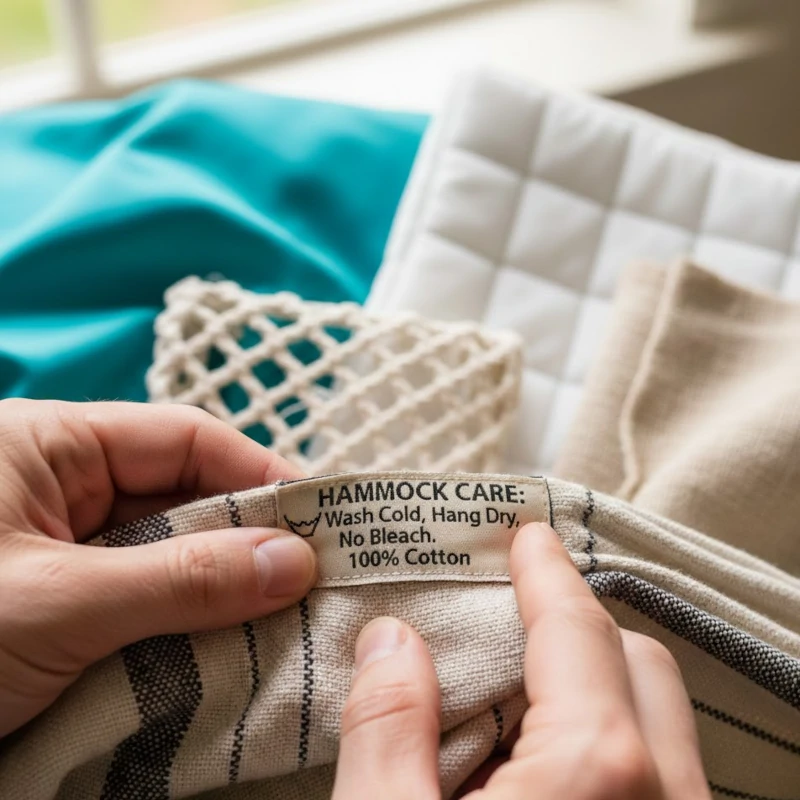
When your hammock needs washing — and it will, eventually — keep it simple.
Hand wash in cool water with a mild, natural soap
Machine wash only on a delicate cycle at 30°C maximum, placed inside a laundry bag
Avoid bleach entirely — it will weaken the cotton fibres and strip the natural warmth from the colour
Do not tumble dry
Wash it only when genuinely needed. Over-washing accelerates wear. A light brush-down and a day in fresh air will handle most situations.
Drying: Patience Rewarded
Always air dry your hammock — ideally hung loosely in a shaded, well-ventilated spot. Direct sunlight will fade the natural tones over time. Avoid drying it in a compressed or folded position, as this can set creases into the weave.
If the cotton feels stiff after drying, a gentle stretch by hand while slightly damp will restore its natural drape.
The Wooden Spreader Bars
If your hammock features solid oak spreader bars, give them occasional attention too. Once or twice a year, apply a small amount of natural wood oil — teak oil or linseed oil both work beautifully. This prevents the wood from drying out and maintains its warm, natural colour. Wipe away any excess and allow to dry fully before use.
Signs of Wear — and What They Mean
A small amount of pilling on the cotton surface is entirely normal and is simply a sign of use, not deterioration. A gentle lint roller will address this easily. If individual threads begin to loosen, tie them off rather than cutting them — cutting can cause further unravelling.
Cotton naturally softens and becomes more supple with time and use. What feels slightly firm when new will, within a few months of regular use, feel entirely different. Better, in fact. This is the nature of natural materials — they improve with a life lived in them.
your hammock was made slowly, by hand, with care. It deserves to be looked after in the same spirit.